How Multitrack Recording Technology Changed Songwriting
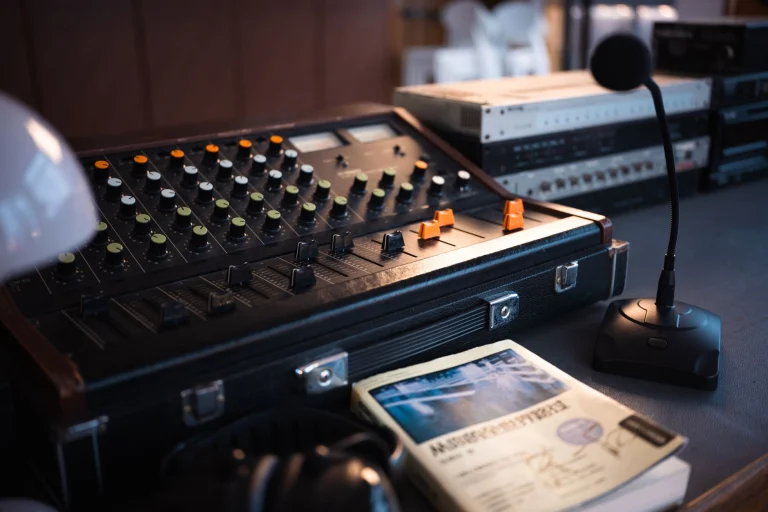
For most of the early history of recorded sound, a song had to be performed from start to finish in a single take, captured live onto a single track with every instrument and voice blended together before the tape ever started rolling. The arrival of practical multitrack recording technology in the 1950s and 1960s broke that constraint apart, allowing musicians and engineers to record separate elements of a song independently and combine them afterward. This shift did more than change recording studios; it changed how songwriters conceived of songs in the first place, opening up possibilities for arrangement, texture, and revision that simply did not exist when every part had to be captured at once, in real time, by musicians playing together in the same room.
From Sound-on-Sound to Multitrack Tape
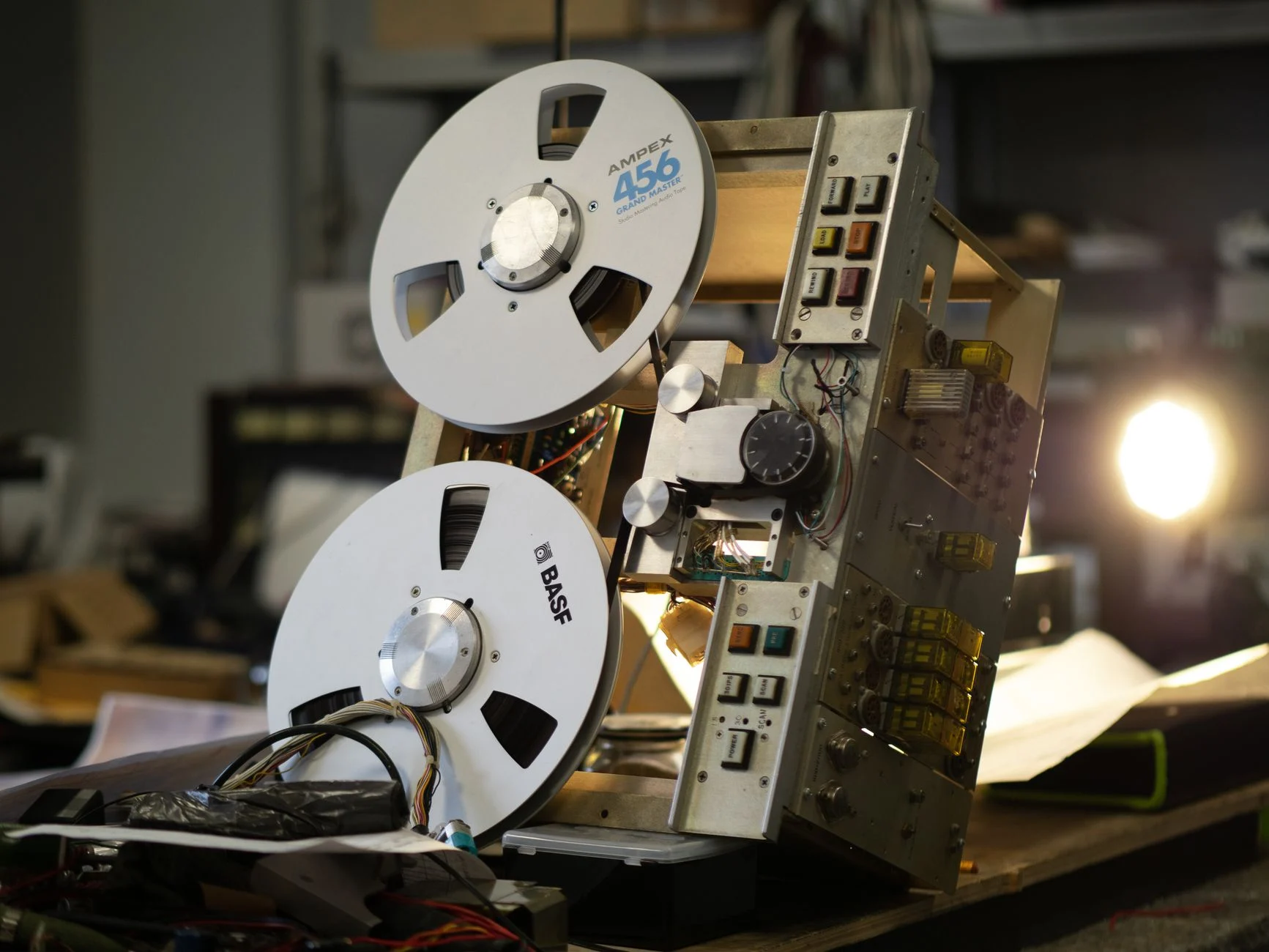
Early experiments in layered recording trace back to guitarist and inventor Les Paul, who in the late 1940s developed sound-on-sound techniques using modified tape machines to record himself playing multiple parts in sequence. These experiments proved that a recording did not have to represent a single, simultaneous performance, but the process remained crude and limited to a handful of generations before sound quality degraded noticeably. True multitrack tape recorders, which stored several discrete, synchronized tracks on a single reel, emerged commercially through companies like Ampex during the 1950s and became increasingly available to professional studios through the following decade. Early systems offered just three or four tracks, a dramatic improvement over single-track mono recording but still a significant constraint compared to the dozens of tracks available later. Even this modest expansion was enough to change how producers and engineers approached a session, since instruments and vocals could now be recorded, adjusted, and replaced independently of one another rather than captured together in a single, unrepeatable moment.
The Beatles, Brian Wilson, and the Studio as Instrument
By the mid-1960s, a handful of ambitious producers and bands began treating multitrack recording not merely as a convenience but as a creative tool in its own right. Brian Wilson’s work with the Beach Boys, examined in depth in coverage of Pet Sounds and its studio innovations, layered unconventional instrumentation and vocal harmonies in ways that would have been nearly impossible to perform live in a single take. At Abbey Road Studios in London, the Beatles and producer George Martin pushed similar techniques further, experimenting with tape loops, reversed recordings, and dense vocal and instrumental layering across the albums that cemented their reputation as studio innovators, a transformation detailed in broader coverage of the band’s evolving relationship with the recording studio. These recordings demonstrated to the wider music industry that a studio album could be an artistic statement distinct from a band’s live performance, built from parts that existed only on tape rather than ever sounding together in a single room.
A New Way to Write Songs
Multitrack recording changed songwriting itself, not just production. Songwriters and bandleaders could now write and rewrite arrangements after the basic structure of a song was already recorded, adding or replacing instrumental parts, experimenting with harmony vocals, or trying out entirely different arrangements for a bridge or chorus without having to re-record the whole performance. This incremental, additive approach to composition encouraged more complex arrangements, since a songwriter no longer needed to imagine a finished arrangement in advance; it could be discovered gradually in the studio, part by part. It also changed the relationship between songwriting and performance, since a part that sounded good on tape did not necessarily need to be something a musician could reproduce unaided on stage. Critics have long debated whether this shift enriched songwriting by removing technical constraints or distanced some recordings from the live tradition that had defined popular music up to that point, and both views appear throughout serious histories of the period.
Once a song no longer had to be captured in a single performance, the recording studio itself became an instrument that songwriters learned to play.
Expanding Beyond Rock
The influence of multitrack recording spread quickly beyond rock music. Soul and funk producers used expanding track counts to build dense horn and rhythm arrangements, while entire later genres built around layered, reconstructed sound, including much of the production approach discussed in coverage of sampling and remix culture, depended on the same underlying principle of separating and recombining recorded elements. As track counts grew from the single digits into the dozens by the 1970s, studios became laboratories for sound rather than simple documentation tools, a shift that also helped elevate the long-playing record itself into a more ambitious artistic format, a development explored further in discussions of the album’s rise as an art form.
Editing, Splicing, and Revision
Multitrack tape also made physical editing a routine part of songwriting rather than an emergency measure. Engineers could splice together different takes, adjust tape speed to shift pitch and tempo, and combine performances recorded weeks apart into a single finished track. One of the most frequently cited examples from the period involved the Beatles joining two otherwise incompatible takes of the same song, recorded at different tempos and in different keys, into a single master by carefully adjusting tape speed during the splice, a technical feat that became possible only because the underlying parts existed on separate, manipulable tracks rather than as a single fused recording. This kind of after-the-fact reconstruction gave songwriters a far more forgiving creative process. A verse that felt flat on the day of recording could be revisited weeks later, a vocal performance could be assembled from the best moments of several attempts, and an arrangement could keep evolving long past the point where a live band would have considered a song finished.
From Tape to Digital
Multitrack recording continued to evolve through the following decades, moving from analog tape machines with limited track counts to digital systems capable of recording and editing an effectively unlimited number of tracks. This evolution eventually enabled the kind of detailed vocal correction and production manipulation examined in coverage of modern production tools like Auto-Tune, extending a lineage that began with Les Paul’s early tape experiments decades earlier. Although the technology changed dramatically, from reel-to-reel tape to hard-disk recording to cloud-based collaboration, the underlying creative principle remained consistent: separating a performance into independent, adjustable parts gives songwriters and producers room to revise, layer, and reimagine a song long after the first notes are played. That flexibility continues to shape how popular music is written, arranged, and recorded today, across virtually every genre.
Historical Context
Ampex introduced professional multitrack tape recorders to American studios during the 1950s, building on wartime-era magnetic tape technology that had only recently become available outside of government and broadcast use. Early multitrack systems typically offered just three or four independent tracks, a number that expanded steadily as demand from ambitious studios and producers grew through the 1960s and 1970s. By the following decade, 16- and 24-track machines had become standard equipment in major commercial studios.
Sources & Further Reading
- Audio engineering histories and trade publications
- Academic studies of recording studio practice and production history
- Album liner notes and studio documentation from major reissues
- Interviews and retrospectives with producers and engineers published by music outlets
- Music technology museum and archival collections