The Rise of the Album as an Art Form
For much of the early rock and roll era, the album was treated as a commercial afterthought: a handful of hit singles padded out with additional filler tracks to fill both sides of a vinyl record. By the second half of the 1960s, that assumption had largely collapsed. Rock musicians, emboldened by advances in recording technology and by their own growing artistic ambitions, began treating the album itself as a unified work, one capable of sustaining a mood, a narrative arc, or a developing musical idea across its full length rather than simply collecting three-minute singles. This piece traces how the album evolved from a disposable commercial product into popular music’s most prestigious artistic format during the 1960s, and how that shift continues to shape the way musicians make records and audiences listen to them today.
The Album Before It Was Art
Through most of the 1950s and into the early 1960s, popular albums were generally assembled around one or two proven hit singles, supplemented with additional recordings chosen for speed and economy rather than any larger artistic vision. The forty-five rpm single remained the industry’s primary commercial and creative unit, and artists, producers, and labels focused most of their energy on crafting songs that could fit within the roughly three-minute window favored by radio programmers. Albums were often recorded quickly, sometimes in a matter of days, and were widely regarded within the industry as a secondary product meant to capitalize on a hit single’s momentum rather than as a serious creative statement in its own right. That commercial logic would look almost unrecognizable within just a few years, as a handful of ambitious bands began asking what an album could accomplish if it were treated with the same seriousness as a single song.
Historical Context
Through most of the 1950s and early 1960s, popular albums were generally built around one or two hit singles supplemented with additional recordings chosen for speed and economy rather than artistic unity. Advances in multitrack recording technology during the mid-1960s gave musicians far greater control over layering, sequencing, and studio experimentation. The emergence of free-form FM radio in the late 1960s, which favored playing full album sides rather than individual singles, reinforced the album’s new status as a serious artistic format.
A New Creative Ambition
Brian Wilson’s work with the Beach Boys on Pet Sounds in 1966 is widely considered a turning point, as Wilson produced a cohesive, emotionally unified album rather than a loose collection of potential singles, using elaborate studio arrangements to tie the record’s songs together thematically and sonically. The Beatles followed a similar trajectory across Rubber Soul in 1965 and Revolver in 1966 before arriving at Sgt. Pepper’s Lonely Hearts Club Band in 1967, an album many critics and historians still cite as a landmark moment in which a rock group used the recording studio itself as a compositional tool, assembling songs, sound effects, and transitions into a continuous listening experience rather than a simple sequence of tracks. These records reflected a broader transformation in how rock musicians understood their own medium, a shift closely tied to the Beatles’ transformation of popular music more generally. Advances in multitrack tape recording during the mid-1960s made this kind of ambition technically possible, letting artists layer instruments, vocals, and effects in combinations that could never be reproduced in a single live take, and inviting listeners to experience an album as one continuous artistic statement rather than a jukebox of unrelated singles.
Technology, Format, and the Concept Album
The album’s new artistic status was reinforced by changes in how people actually listened to music. The standardization of the stereo long-playing record gave engineers more creative room to place sounds across the stereo field, while the emergence of free-form FM radio in the late 1960s encouraged disc jockeys to play extended album tracks, and sometimes entire album sides, rather than limiting themselves to edited singles favored by AM radio. That shift fed directly back into musicians’ own ambitions, since artists now knew a meaningful portion of their audience might encounter an album in full sequence rather than through a single edited for radio play. Concept albums, in which songs were connected by a recurring theme, narrative, or musical motif, became increasingly common across rock through the late 1960s and into the 1970s, spanning everything from progressive rock epics to intimate singer-songwriter records built around a single emotional arc. The album had effectively become rock music’s primary canvas, replacing the single as the format most closely associated with serious artistic achievement.
The Album as Artifact
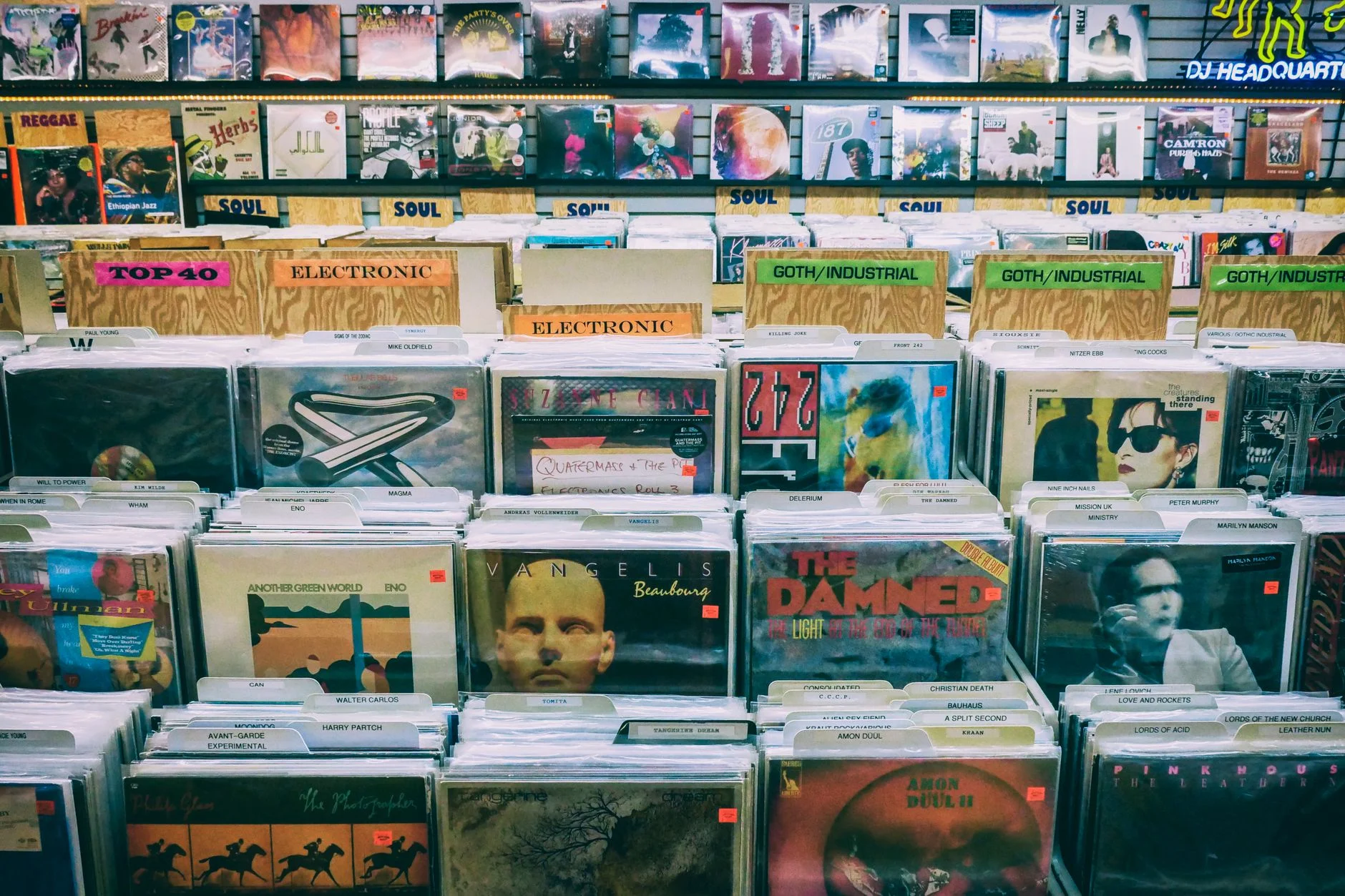
As albums gained artistic weight, their physical packaging increasingly became part of the work itself, with elaborate gatefold sleeves, printed lyrics, and carefully designed artwork extending a record’s ideas beyond the music alone, a visual dimension explored at length in the story of the album cover as an art form in its own right. Later albums such as Fleetwood Mac’s Rumours in 1977 further cemented the idea that a cohesive, emotionally unified album, built around a clear sound and often a shared personal history among its musicians, could become a defining cultural document of its era, selling on the strength of a complete listening experience rather than on the appeal of isolated hit singles. By the 1970s, critics, radio programmers, and record buyers alike had largely accepted the album, rather than the single, as the primary measure of a rock artist’s seriousness and ambition, a remarkable reversal of the commercial priorities that had governed the format just a decade earlier.
Once the album became something meant to be experienced from beginning to end, the single stopped being the only artistic ambition a musician could reasonably hold.
A Format Under Pressure
The album’s dominance lasted roughly three decades, but it began to erode first with the arrival of digital downloads in the early 2000s and then more decisively with the streaming era, which once again foregrounded the individual track over any carefully sequenced whole, in some ways echoing the singles-driven market that existed before rock musicians’ artistic turn in the 1960s. Streaming playlists, often built around individual songs pulled from many different artists and albums, have little inherent regard for the sequencing an artist intended, and listening habits have shifted accordingly. Even so, many contemporary artists continue to frame their releases explicitly as full albums, consciously invoking that decades-old tradition of the unified artistic statement, suggesting that the album’s prestige as a format has outlasted, at least so far, the commercial conditions that originally gave rise to it.
Sources & Further Reading
- Music criticism and retrospectives on landmark rock albums of the 1960s and 1970s
- Books and documentaries on the history of recording studio technology
- Industry histories of the vinyl LP format and FM radio programming
- Biographical and historical accounts of pioneering studio producers and engineers
- Academic writing on the album as a cultural and artistic form