Sampling, Remix Culture, and the Changing Idea of Originality
Few techniques have done more to unsettle traditional ideas of authorship than sampling. Starting in the 1970s and accelerating through the 1980s, hip-hop producers began building entirely new songs out of fragments lifted from existing recordings, turning old funk breaks, drum fills, basslines, and vocal snippets into raw material for fresh compositions. The practice was resourceful and, for a time, almost entirely unregulated: a producer with a pair of turntables, and later a sampler, could reach into decades of recorded music and repurpose it however they liked. By the end of the 1980s, though, that freedom collided head-on with copyright law, and the music industry was forced to decide, often in a courtroom, what counted as creative transformation and what counted as theft. This piece traces how sampling grew from an improvised studio technique into a defining feature of modern popular music, and how the legal and cultural battles it triggered reshaped the very idea of originality.
Turntables, Tape Loops, and the Breakbeat
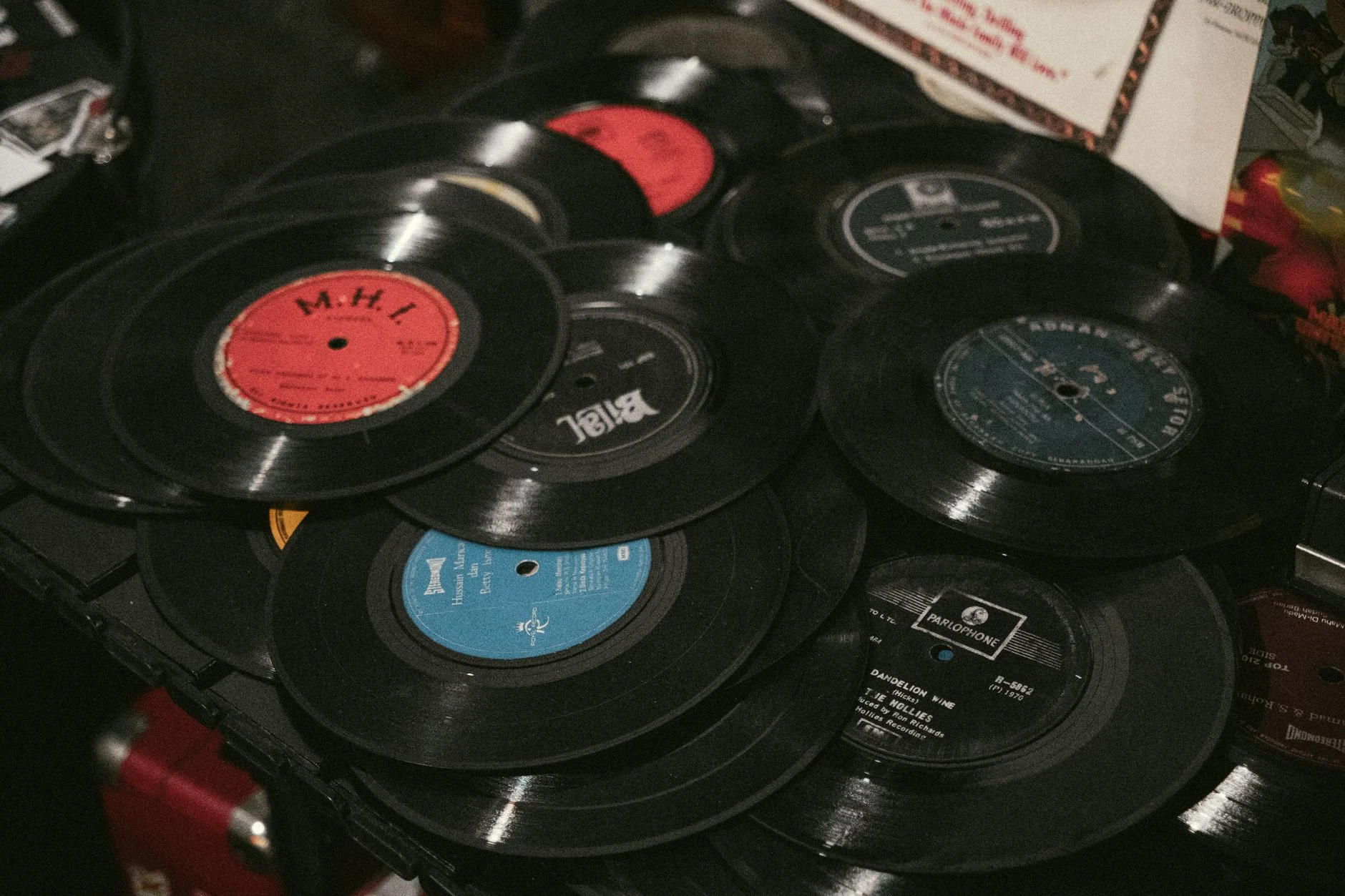
Sampling’s roots lie in the DJ culture that emerged in New York City’s Bronx during the early 1970s, where DJs discovered that dancers responded most energetically to the short instrumental passages in funk and soul records known as breaks, usually a few bars of drums and bass with the vocals and melody stripped away. Using two copies of the same record on dual turntables, pioneering DJs learned to extend a four-second break into a continuous, unbroken groove, looping it back and forth for as long as the crowd wanted to dance. Recordings by James Brown and his bandleaders were sampled so often that their drummers’ rhythms became something close to hip-hop’s rhythmic alphabet, a debt that ties directly into the larger story of funk’s rhythmic legacy. As hip-hop moved from live park and club performances into recording studios in the early 1980s, producers began supplementing turntables with drum machines, and soon after with digital samplers such as the E-mu SP-1200 and the Akai MPC, devices that could capture a short digital snippet of any sound and trigger it on command. This technology allowed far denser, more intricate layering than two turntables alone, and by the middle of the decade entire songs were being constructed almost wholly from sampled fragments of other artists’ recordings, stacked and rearranged into something new.
Historical Context
Sampling emerged directly from hip-hop’s DJ culture in New York City during the 1970s, when DJs isolated and looped the rhythmic breaks of funk and soul records for dancers. By the mid-1980s, affordable digital samplers let producers incorporate short recorded fragments into entirely new compositions, a practice that outpaced existing copyright law. The 1991 ruling in Grand Upright Music, Ltd. v. Warner Bros. Records established that sampling without a license could constitute copyright infringement, prompting the industry to formalize sample clearance. That legal framework still governs how sampled music is cleared and monetized today.
When Borrowing Became a Lawsuit
For most of the 1980s, sampling existed in a legal gray area that most producers simply ignored; many treated any released recording as available creative material and rarely sought permission before using it. That assumption collapsed in 1991, when a federal court ruled against rapper Biz Markie in Grand Upright Music, Ltd. v. Warner Bros. Records, finding that his unlicensed use of a sample from singer-songwriter Gilbert O’Sullivan’s recording amounted to copyright infringement. The ruling sent an unmistakable signal across the record industry: sampling without clearance now carried real financial and legal exposure. Labels moved quickly to build formal sample-clearance departments, music publishers began setting licensing fees for even brief excerpts, and producers started budgeting for samples the same way they budgeted for studio time or mixing engineers. Some acts, including the members of De La Soul, had already run into legal trouble over uncleared samples used on acclaimed early albums, complications that would later delay those very recordings from reaching streaming platforms decades afterward. Other producers responded by clearing fewer, more prominent samples outright, or by hiring studio musicians to re-record a similar part, a workaround that avoided licensing fees while preserving a record’s sampled feel. Whatever the strategy, the era of casually lifting a loop from someone else’s record without consequence had effectively ended, and sampling became as much a matter of contract negotiation as creative instinct.
Remix Culture Beyond Hip-Hop
Sampling’s influence did not stay confined to hip-hop. Dance and electronic producers built entire subgenres on the practice of remixing existing tracks, with house and techno DJs reworking disco, soul, and garage recordings into new club anthems built for an entirely different listening environment than the original. The remix itself became a commercial product in its own right, as record labels routinely commissioned alternate versions of singles tailored for radio, nightclubs, and later music video rotation. Digital audio workstations in the 1990s and 2000s made this kind of manipulation dramatically easier and cheaper, and the rise of affordable home studio software extended remix culture to anyone with a laptop, well beyond professional producers. Mashups, which blend two unrelated songs into a single new track, pushed the same borrowing impulse even further. Decades later, the techniques associated with Auto-Tune and the broader toolkit of modern pop production carried that same spirit of technological reinvention into the mainstream, treating the human voice itself as raw material to be reshaped, pitched, and reassembled much the way a sampler reshapes a drum break.
Sampling asked a question the music industry had never been forced to answer so literally: at what point does transforming someone else’s recording become a work of one’s own?
Sampling as Cultural Memory
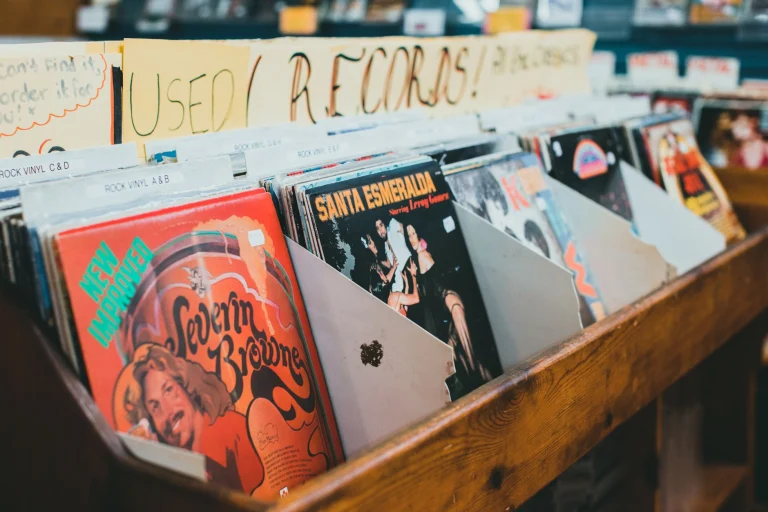
Beyond the legal questions, sampling also functioned as a form of cultural preservation. By looping a forgotten soul single or an obscure funk break, hip-hop producers often introduced listeners, sometimes unknowingly, to musicians and recordings that had long since faded from commercial visibility. Older artists occasionally found their work, and their royalty checks, revived decades after its original release because a new generation of producers had rediscovered it through sampling. Crate-digging, the practice of searching used record stores and warehouses for obscure vinyl worth sampling, became its own subculture within hip-hop production, prized as much for musical knowledge as technical skill. In this sense, sampling carried forward older musical traditions of quotation and homage even as it introduced an entirely new, legally fraught mechanism for doing so.
Rethinking Originality
Critics and historians have increasingly argued that sampling did not invent the idea of musical borrowing so much as make it visible, literal, and commercially contested. Blues and jazz musicians had long quoted, reworked, and reinterpreted each other’s phrases by ear, and composers in earlier centuries built entire works as variations on existing themes. What sampling changed was the mechanism: instead of reinterpreting a melody or rhythm through live performance, a producer could now reproduce the exact recorded sound of the original, note for note, which raised uncomfortable new questions about whether a given use amounted to tribute, theft, or something genuinely in between. Many historians consider early hip-hop’s sampling culture a form of audio collage, comparable to appropriation-based movements in the visual arts, in which the act of selecting, transforming, and recombining existing material was itself the creative statement. That argument gained fresh relevance in the streaming era, when complex rights-tracking systems had to calculate royalty shares across dozens of interwoven samples credited on a single track, and when hip-hop’s growth from a local culture into a worldwide movement meant sample-heavy music was reaching millions of listeners who had never heard, and might never hear, the original recordings being quoted.
Sources & Further Reading
- Music journalism and criticism covering hip-hop production history
- Legal case records and summaries from U.S. copyright litigation
- Books and academic studies on hip-hop culture and remix theory
- Industry trade coverage of sample clearance and licensing practices
- Retrospective interviews with producers and DJs in music documentaries and press