
Progressive Rock and the Album as Concept
By the early 1970s, a growing number of rock musicians had stopped thinking of the album as a simple collection of singles and started treating it as something closer to a long-form composition, with recurring themes, extended instrumental passages, and sometimes an entire narrative arc stretched across a single disc. That ambition became the defining trait of progressive rock, a movement that borrowed structural ideas from classical music and jazz and applied them to electric instruments and rock rhythm sections. This piece looks at where progressive rock came from, what made it sound so different from the rock around it, who defined the style, and why its idea of the album as an artistic statement still echoes through popular music.
Historical Context
Progressive rock took shape in the United Kingdom in the late 1960s, as psychedelic rock’s experimentation with studio effects and unconventional song structures began to settle into a more deliberate, compositionally ambitious approach. Many of the musicians involved had formal training or strong interests in classical music and jazz, and they saw rock as a vehicle capable of the same scale and seriousness as those older traditions. The result was a wave of bands determined to stretch songs well beyond the three-minute pop single, often across entire album sides.
Historical Context
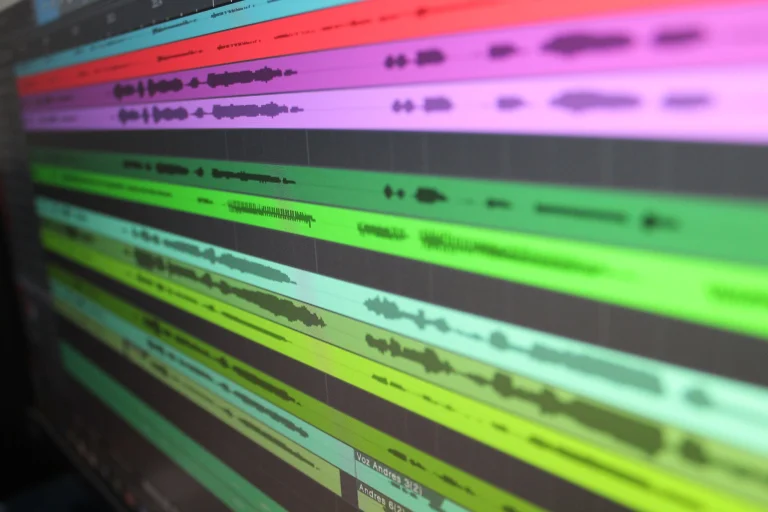
Progressive rock developed alongside major advances in studio technology, including multitrack recording and the growing availability of instruments like the Mellotron and early synthesizers, which gave bands new orchestral and textural options. It also benefited from the album-oriented FM radio format that took hold in the early 1970s, which was far more willing than Top 40 AM radio to play extended tracks in full. Britain’s art-school and conservatory-trained musician pipeline helped supply the movement with players comfortable borrowing ideas from classical and jazz traditions.
Several of the genre’s defining bands formed directly out of that late-1960s ferment, often beginning as blues or psychedelic outfits before deliberately pushing their material toward longer forms and more unconventional structures. The shift was as much conceptual as technical: musicians increasingly spoke of albums as complete works meant to be experienced in full, rather than as containers for standalone hit singles, a philosophy that set progressive rock apart from most of the rock and pop landscape surrounding it.
Prior Influences
Progressive rock’s most direct ancestor was the mid-to-late 1960s wave of studio-driven pop and rock albums that treated the LP as a unified artistic work rather than a assortment of singles, a shift widely associated with records such as the Beach Boys’ Pet Sounds and the Beatles’ later studio albums. Classical music supplied formal structures, including suites, movements, and thematic development, that progressive musicians adapted for electric instruments. Jazz contributed a comfort with improvisation, odd meters, and virtuosic solo playing. Psychedelic rock, with its already loosened sense of song structure and its embrace of studio experimentation, provided the immediate stylistic runway from which progressive rock took off.
Sonic Characteristics
Progressive rock is most easily identified by what it refuses to do: stay within conventional song length or structure. Tracks frequently ran well past ten minutes, organized into distinct sections or movements rather than simple verse-chorus patterns. Odd and shifting time signatures were common, as were abrupt tempo and key changes. Keyboards, especially the Mellotron, Hammond organ, and early synthesizers, often carried as much melodic weight as the guitar, giving many progressive recordings a lush, orchestral quality. Concept albums, built around a unifying story, theme, or philosophical idea, became one of the genre’s signature achievements, turning the record itself into a kind of narrative or conceptual object rather than a mere song collection. Many progressive releases also used recurring musical motifs that reappeared across different tracks or sides of an album, reinforcing the sense that listeners were meant to hear the record as a single continuous work rather than a sequence of unrelated songs.
Key Artists
King Crimson’s 1969 debut is widely credited with crystallizing progressive rock’s ambitions in a single, fully realized album. Pink Floyd carried the genre to its greatest commercial heights, producing landmark concept-driven records that paired musical experimentation with striking studio production and elaborate stage presentation. Yes and Genesis built reputations on intricate musicianship and fantastical, often literary lyrical concepts, while Emerson, Lake and Palmer pushed classical-rock fusion to its most overtly virtuosic extreme. Jethro Tull brought folk and jazz coloring into the mix, further demonstrating how wide the progressive umbrella could stretch. Many of these bands also emerged from, or alongside, the guitar-centered scene chronicled in the British blues boom and its influence on rock, even as their music moved in a very different direction.
Evolution Over Time
Progressive rock’s commercial and creative peak ran roughly from 1969 through the mid-1970s, a period that produced many of the genre’s most celebrated albums and saw its leading bands fill arenas with increasingly elaborate stage shows. By the late 1970s, the movement faced a sharp backlash, as punk rock’s stripped-down, anti-virtuosity ethos positioned itself directly against progressive rock’s perceived excess and self-seriousness. Several leading bands responded by simplifying their sound to court mainstream radio, while others largely disbanded or faded from view. The style never fully disappeared, however. A “neo-progressive” revival took hold in the 1980s, led by bands drawing directly on the genre’s 1970s template, and progressive ideas later resurfaced in progressive metal and various strains of art rock, carrying the album-as-statement philosophy forward even as the original movement’s commercial moment passed.
Cultural Impact
Progressive rock helped cement the idea, still influential today, that an album could function as a unified artistic work rather than a simple product for radio. That philosophy extended beyond the music itself into elaborate album packaging and cover art, which became inseparable from many progressive releases and contributed to the broader rise of the record sleeve as a creative canvas. Progressive rock’s ambitious live shows, often featuring theatrical staging and complex instrumental arrangements, also helped establish expectations for rock as large-scale spectacle rather than a straightforward club performance.
The genre’s commitment to musicianship also raised the bar for instrumental skill across rock as a whole. Many progressive players had backgrounds that gave them technical fluency well beyond typical rock training, and their example encouraged a generation of musicians to approach guitar, keyboards, bass, and drums with a seriousness more often associated with classical performance. That emphasis on virtuosity would later resurface, in a very different guise, within heavier rock subgenres that prized technical precision.
Where most rock records of the era were built around songs, progressive rock’s defining bands built records around ideas, and let the songs follow.
Legacy
Progressive rock’s most durable legacy lies in its insistence that popular music could carry the same formal ambition as classical composition or extended jazz performance without abandoning rock instrumentation. That conviction directly shaped the rise of the album as an art form, an idea that has outlived the progressive rock movement itself and continues to inform how many contemporary artists approach full-length releases. Advances in studio technology that progressive bands leaned on heavily also fed into broader shifts documented in the history of how multitrack recording technology changed songwriting. Decades after its commercial peak, progressive rock’s willingness to treat the album as a complete artistic statement remains one of its most widely imitated contributions to popular music.
Sources & Further Reading
- Music history reference works and encyclopedias covering 1970s rock movements
- Retrospective artist and album features from established music magazines
- Liner notes and reissue documentation from major record labels
- Academic writing on progressive rock and popular music studies
- Documentary programming and archival interviews with progressive rock-era musicians