Songs in the Key of Life and Stevie Wonder’s Creative Peak
When Stevie Wonder finally released Songs in the Key of Life in September 1976, after nearly two years of delays and false finish lines, the album arrived less as a new record than as an event. It was a sprawling two-disc set with a bonus seven-inch EP, totaling more than an hour and forty minutes of music, and it would go on to be remembered as the summit of Wonder’s extraordinary mid-1970s run and one of the most fully realized albums in American popular music.
Production Context
By the mid-1970s, Stevie Wonder was no longer simply a Motown hitmaker; he had become one of the most ambitious composers and producers working in popular music. His three preceding albums, Music of My Mind, Talking Book, and Innervisions, along with 1974’s Fulfillingness’ First Finale, had already reshaped expectations for what a soul album could sound like, folding synthesizers, jazz harmony, and socially conscious lyrics into songs built for radio. That run of success gave Wonder unusual leverage. In 1975 he signed a new contract with Motown reportedly worth more than ten million dollars, among the richest recording deals of its era, which guaranteed him near-total creative control over his next project. Songs in the Key of Life was the result of that freedom, and its scale reflected it.
A Career at Its Height
Wonder entered the recording of this album as an artist at the height of his commercial and critical standing, having already won multiple Grammy Awards for his previous two records. He was also a new father, and the arrival of his daughter Aisha informs some of the album’s most tender material. Rather than consolidate his sound, Wonder used this moment to expand it further, pursuing a kind of personal and musical stock-taking that moved between joy, grief, political anger, and spiritual reflection. The album’s working title during production was reportedly Let’s See Life the Way It Is, a phrase that hints at the ambition behind the project: not a collection of singles but a unified statement about the breadth of Black American experience in the 1970s.
Writing and Recording
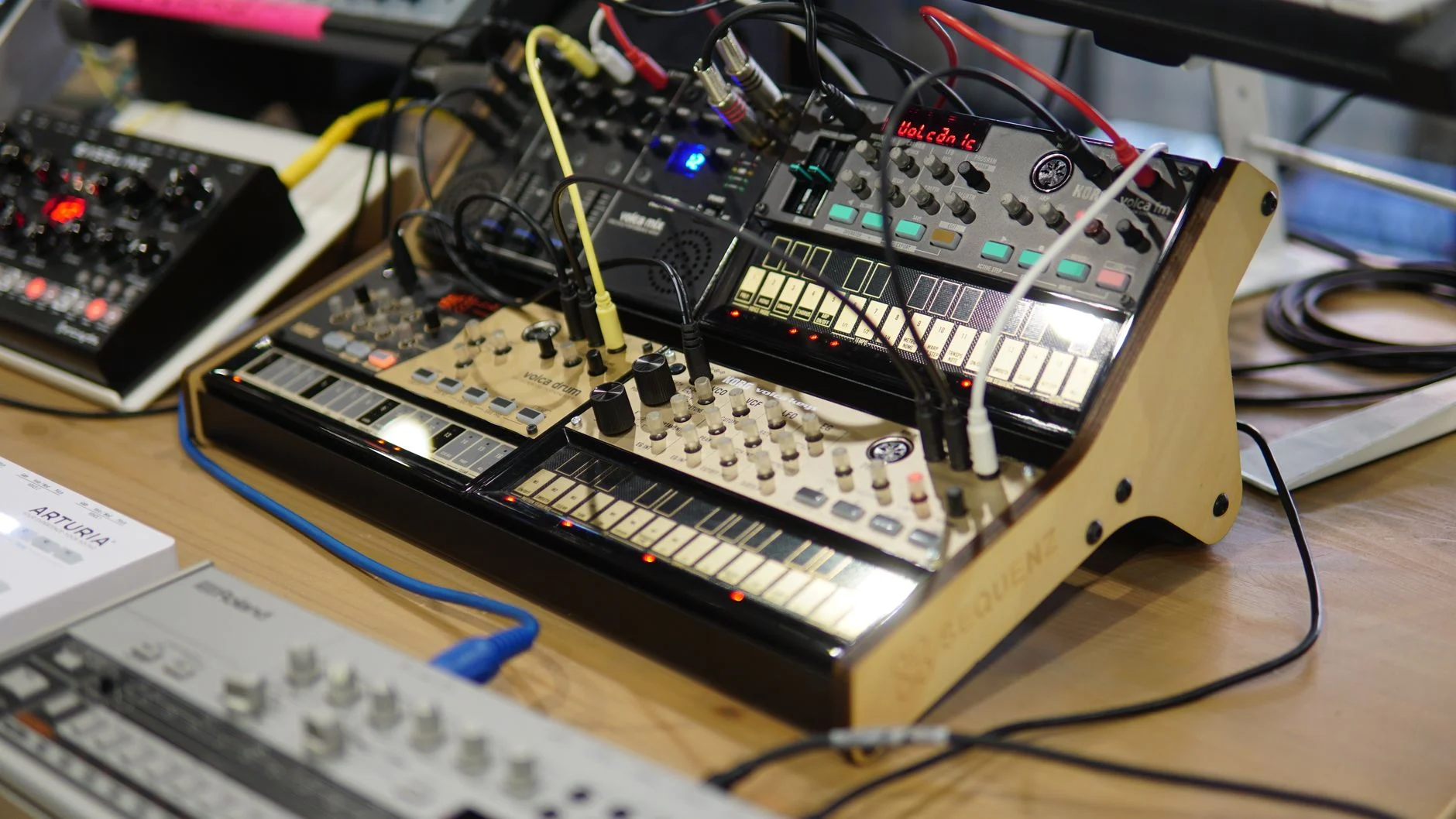
Recording stretched across studios in Los Angeles and New York, including Crystal Sound and The Record Plant, over a period that many accounts place at roughly two years, with Motown reportedly growing anxious over repeated release delays. Wonder played the overwhelming majority of instrumental parts himself, as he had on earlier albums, weaving together keyboards, synthesizers, harmonica, and drums, while bringing in collaborators including bassist Nathan Watts and a rotating cast of backing vocalists and horn players for color. The sessions relied heavily on the synthesizer programming expertise that had already defined much of his 1970s catalog, part of a broader story in how the Motown sound was created and then continually renewed by its own artists. The sheer volume of material Wonder generated meant that even a double album could not contain everything; a handful of additional songs were issued on the accompanying bonus disc.
Musical Characteristics
Few albums move across as much stylistic terrain while still feeling like a single coherent work. “Sir Duke” is a horn-driven tribute to Duke Ellington and the jazz tradition that shaped Wonder’s own musicianship. “I Wish” turns a childhood memory into tight, syncopated funk. “Isn’t She Lovely” is a buoyant, almost diaristic celebration of new fatherhood, while “As” builds from a simple gospel-tinged vamp into a sweeping, almost symphonic declaration. Elsewhere, the record turns pointedly political: “Village Ghetto Land” uses mock-baroque string arrangements to underline lyrics about urban poverty, and “Pastime Paradise” layers somber strings and chanting voices into a meditation on history and inequality. That stylistic range, moving between love songs, social commentary, and genre homage without losing its identity, is central to why critics and musicians still treat the album as a high-water mark for what a Stevie Wonder record, and a soul album generally, could accomplish.
Many historians consider Songs in the Key of Life the clearest demonstration of Wonder’s ability to hold intimate emotion and broad social observation inside the same song cycle, without either register overwhelming the other.
Reception
The album was a commercial sensation on arrival, entering the Billboard 200 at number one, a rare feat at the time, and it would go on to produce multiple hit singles, including “I Wish” and “Sir Duke,” both of which reached number one on the Billboard Hot 100. Critics were similarly enthusiastic, praising the record’s ambition and emotional range even as some noted its length made for a demanding listen. At the Grammy Awards ceremony that followed its release, Wonder won Album of the Year, his third such win in four years, along with additional awards, cementing his status as the defining popular musician of the decade. The honor reflected not just the strength of individual songs but a broader industry recognition that the long-playing record itself could function as a serious artistic statement, a trajectory closely tied to the rise of the album as an art form during this period.
Historical Context
Songs in the Key of Life arrived at a moment when American soul and funk artists were increasingly using full-length albums, rather than singles, to address subjects like urban poverty, Black history, and racial inequality alongside personal and romantic themes. Synthesizer technology had matured enough by the mid-1970s to let a single musician realize elaborate orchestral textures largely alone, a capability Wonder had already explored on his previous records. The album also landed during the bicentennial year of 1976, a period of heightened national reflection on American history and identity that resonates with several of its more pointed lyrical themes.
Legacy
Decades later, Songs in the Key of Life remains a reference point cited by songwriters, producers, and critics across genres, frequently appearing near the top of lists ranking the greatest albums ever recorded. Its influence runs especially deep in hip-hop and contemporary R&B, where producers have returned repeatedly to its melodies and chord structures; the 1995 single “Gangsta’s Paradise” built its entire foundation around a sample of “Pastime Paradise,” one of the most well-known examples in sampling and remix culture drawing directly from Wonder’s catalog. The album’s success also reinforced the funk-rooted, synthesizer-forward production approach Wonder had already popularized on tracks like “Superstition”, extending its reach into a longer, more varied body of work. For many listeners and musicians, it still represents the clearest single document of what Wonder was capable of at the peak of his powers.
Sources & Further Reading
- Grammy Awards historical records and ceremony archives
- Billboard chart history and contemporary music industry trade coverage
- Major music encyclopedias and reference biographies of Stevie Wonder
- Retrospective album reviews and critical essays from established music publications
- Liner notes and reissue documentation for Songs in the Key of Life