Prince: Musicianship, Independence, and Creative Control
Few artists in American popular music have insisted on total authorship of their own sound the way Prince did. Across a career that began in the Minneapolis suburbs in the late 1970s, he built a reputation not just as a singular performer but as a one-man band capable of writing, arranging, playing, and producing nearly every note on his records. That combination of virtuosity and control became both his artistic signature and the engine of a decades-long struggle with the recording industry, one that reshaped how musicians think about ownership of their own work.
A Prodigy’s Foundations
Prince Rogers Nelson grew up in Minneapolis immersed in music; his father played piano and led a jazz trio, and the young Prince taught himself piano, guitar, bass, and drums before he reached his teens. By the time he signed his first recording contract as a teenager, he had already demonstrated an unusual command of multiple instruments, and he negotiated for the right to produce his own material rather than hand it to staff producers, an almost unheard-of concession for a new artist at the time. That early insistence on self-direction set the pattern for everything that followed.
His earliest albums, released at the turn of the 1980s, showcased a musician equally fluent in funk, rock, and synthesizer-driven pop, often playing every instrument himself in the studio. This was not a gimmick; it reflected a genuine fluency across genres that most contemporaries approached as specialists. The result was a sound that drew from the rhythmic discipline of funk’s rhythmic tradition while layering in rock guitar textures and the crisp electronic pulse of new drum-machine technology.
The Minneapolis Sound
By the early 1980s, Prince had helped define what critics came to call the Minneapolis Sound: a hybrid of funk bass lines, rock guitar, synth-pop textures, and stripped-down, syncopated drum programming. He produced work not only for himself but for an orbit of associated acts, extending his musical ideas across a small constellation of Minneapolis-based projects. Many historians consider this cross-pollination, in which Prince wrote and produced for other artists under his own name and various pseudonyms, evidence of a songwriting and production imagination unusually prolific even by the standards of popular music’s most productive figures.
The commercial and critical peak of this period arrived with the album and film project that paired music with cinema, a multimedia statement that fused his guitar-driven rock instincts with devotional, gospel-inflected balladry and tight funk workouts. The project cemented his status as one of the defining performers of the decade and demonstrated his ability to move fluidly between genres within a single, cohesive artistic statement.
The Battle for Creative Control
Prince’s determination to control his own output eventually brought him into open conflict with his record label, Warner Bros. During the early 1990s, he grew frustrated with what he viewed as the label’s restrictions on how much music he could release and who owned the rights to his recordings and his name as a commercial brand. In a widely documented protest, he changed his performing name to an unpronounceable symbol and began appearing in public with the word “Slave” written on his cheek, a pointed statement about what he saw as an unfair imbalance between artists and the corporations that distributed their work.
His name change and public protest were widely understood at the time as a deliberate, symbolic argument about who truly owns a musician’s creative output — the artist or the company that distributes it.
Once free of that contract, Prince became an outspoken advocate for artists owning their master recordings, a position that was ahead of its time and that gained renewed relevance decades later as other prominent musicians began publicly fighting for ownership of their catalogs. He also became an early adopter of direct-to-fan distribution, releasing material independently and experimenting with internet-based sales models years before streaming reshaped the industry.
Technology as an Instrument
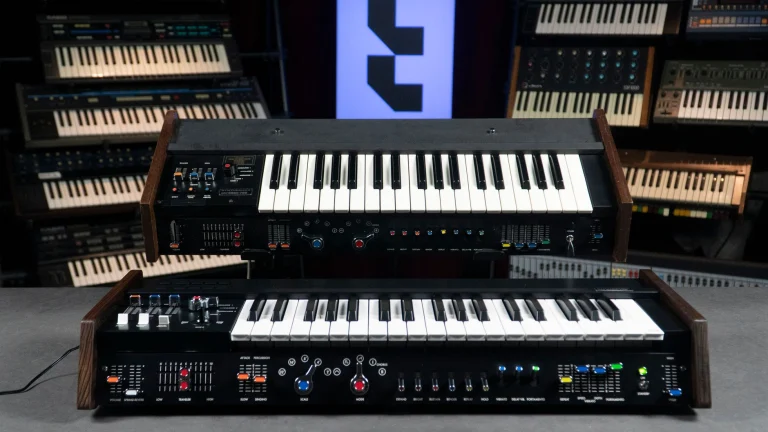
Part of what made Prince’s independence practically possible was his early embrace of recording technology. He was among the first prominent artists to make extensive creative use of the Linn drum machine, exploiting its programmable patterns to build the tight, synthetic rhythm tracks that defined much of his early-to-mid-1980s output. He built his own production complex, Paisley Park, outside Minneapolis, giving him a home base where he could write, record, and complete entire albums without dependence on outside studios or additional personnel. This technological self-sufficiency let him move with extraordinary speed, reportedly completing songs and even full albums in short, concentrated bursts of work, and it left behind an enormous vault of unreleased recordings that have continued to surface in posthumous releases.
A Reputation Built on the Stage
Prince’s command of his own catalog was matched by a formidable reputation as a live performer and guitarist, qualities that sometimes went underappreciated amid the attention paid to his showmanship and persona. Musicians who shared stages with him frequently described his instrumental ability in glowing terms, and one of the most widely cited demonstrations of that skill came during a 2004 Rock and Roll Hall of Fame all-star tribute concert honoring George Harrison, where Prince delivered an extended, widely celebrated guitar solo that is still frequently cited by critics and musicians as one of the great unscripted performances of the era. Moments like that reinforced a broader truth about his career: beneath the elaborate stagecraft was a musician whose technical command of his instruments rivaled his gifts as a composer and producer.
That same instrumental command extended to his notoriously demanding approach to assembling and rehearsing backing bands, including the ensembles that supported him through the 1980s. He expected collaborators to match his own fluency across genres, and he frequently reworked arrangements on short notice during live shows, treating performance itself as a continuation of the same restless creative process that governed his studio work.
Historical Context
Prince’s rise coincided with the consolidation of major record labels in the 1980s, a period when artists had limited leverage over contract terms and catalog ownership. His public dispute with Warner Bros. unfolded alongside broader industry debates about royalty rates and master-recording rights that would later resurface in the digital-streaming era. His early adoption of drum machines and synthesizers also tracked a broader shift in American pop and R&B production away from large studio ensembles toward smaller, technology-driven home recording setups.
Legacy and Influence
Prince’s influence is audible across generations of R&B, funk, and pop musicians who absorbed his fusion of genre boundaries, his falsetto-driven vocal style, and his guitar virtuosity. Artists working in hip-hop, neo-soul, and contemporary pop have cited him as a foundational reference point, and his willingness to blend explicit sexuality, spirituality, and social commentary within the same body of work expanded what mainstream pop music was permitted to address. Critics and historians frequently place him alongside other artists celebrated for continual reinvention and alongside contemporaries like the decade’s other defining pop innovators, though his insistence on instrumental mastery and studio self-sufficiency set him apart even within that company.
Beyond the music itself, Prince’s decades-long campaign for artistic and financial independence left an institutional mark on the industry. His example is frequently invoked in discussions of artist rights, catalog ownership, and the tension between commercial infrastructure and creative freedom, making him as significant a figure in the business history of American music as in its sound.
Sources & Further Reading
- Rock & Roll Hall of Fame induction materials and biographical archives
- Grammy Awards historical records and official artist biographies
- Contemporary reporting and retrospective coverage in Rolling Stone and Billboard
- Library of Congress National Recording Registry essays on landmark American recordings
- Published interviews and documentary accounts from Paisley Park-era retrospectives